Buying a multifunction laser platform: a function-by-function checklist
A multifunction laser platform promises several treatments from one unit, and that promise is exactly where buying mistakes happen. Buyers check the platform as a whole, agree a price for the whole, and only later discover that one function needs an attachment they did not order, or that one function's specification differs from what they assumed.
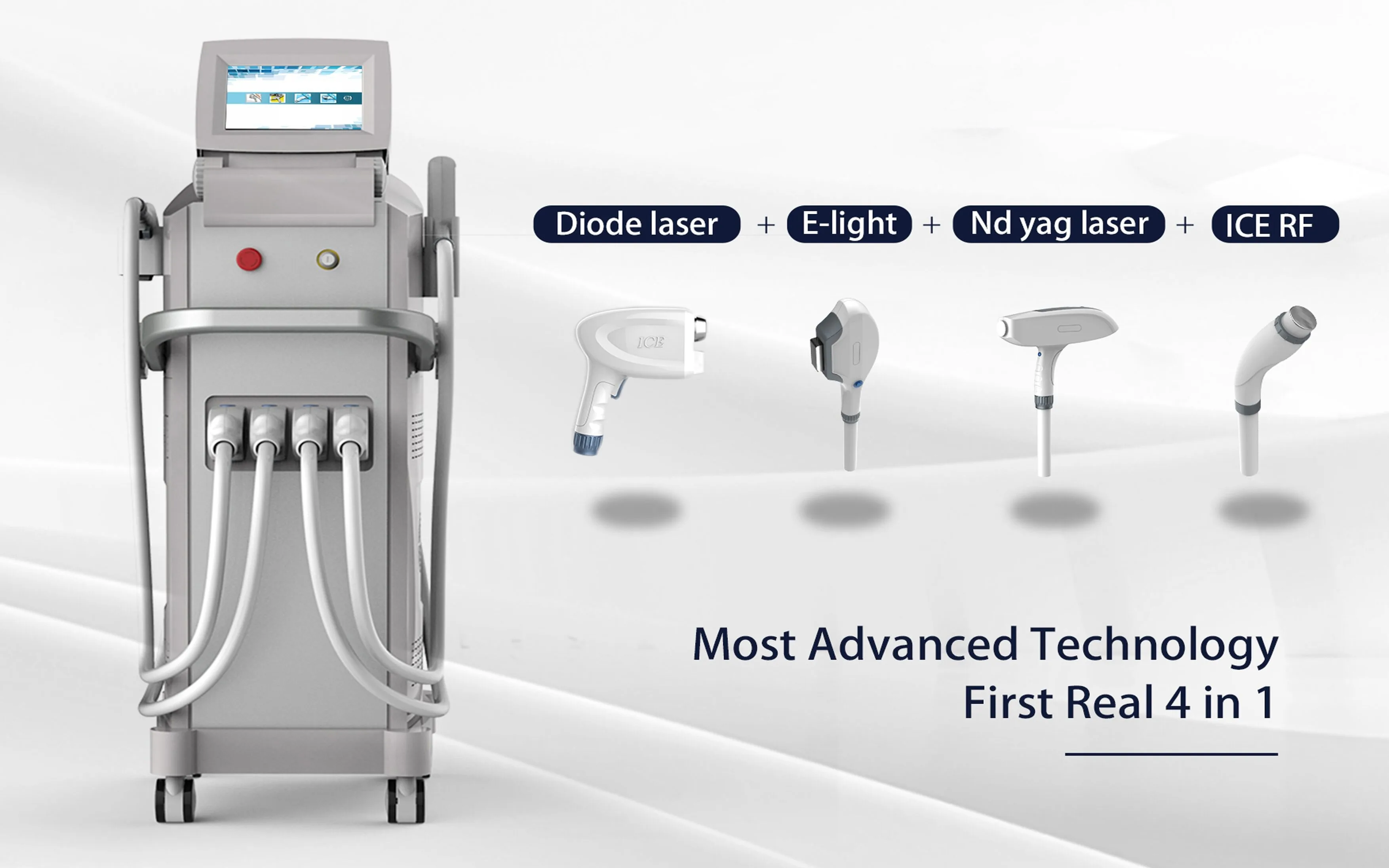
This checklist avoids that mistake by treating a multifunction platform as four separate purchases that happen to share a housing. It uses the DPL4-A2 platform from Beijing Stelle Laser Technology as its working example, because that platform's four functions are documented on the manufacturer's own product page. The checklist itself applies to any multifunction platform, whatever the maker.
Step one: list the functions you actually need
Write down the functions your business needs before looking at any platform. A salon that offers hair removal, skin treatment, and facial work needs diode laser, IPL and E-light, and RF functions. A clinic that also removes tattoos needs the Nd:YAG function as well. A buyer who starts from the platform's function list, rather than from their own needs, tends to pay for functions they never use.
The DPL4-A2 platform lists four functions: diode laser hair removal, IPL and E-light skin treatment, Nd:YAG laser tattoo removal, and RF face lifting. If your business needs only two of those, a two-function machine or a dedicated machine may serve you better than a four-function platform, and the price comparison should reflect that. Multifunction is a convenience, not a virtue in itself.
Step two: check each function separately
For each function on your list, confirm the wavelengths, the spot sizes, and the handpieces. Diode laser on the DPL4-A2 page means 808nm, or a mixed 755nm, 808nm, and 1064nm combination. IPL and E-light on the same page means three bands: 480nm to 1200nm, 530nm to 1200nm, and 640nm to 1200nm. Nd:YAG means Q-switch work at 532nm, 1064nm, and 1320nm, including the black facedoll treatment at 1320nm with carbon powder. RF means bipolar RF for face lift and skin rejuvenation, face only.
Check handpieces function by function. A platform may include the handpieces for three functions and list the fourth function's handpiece as optional, or it may include all four and differ only in consumables. Ask the supplier to list, in writing, which handpieces are included for each function and which are optional extras. A platform comparison that does not list handpieces per function is not a comparison at all.
Step three: check power, services, and support
The shop timeline description of the 4-in-1 family notes a modular design with a separate independent power supply for each function. That design point matters for servicing, but independent power supplies do not prove fault isolation, and this site does not claim it. Ask the supplier to confirm whether the purchased model can be serviced independently, and whether a single-function fault affects other functions.
Then check the services listed on the manufacturer's product page: OEM and ODM services, a free design service covering software and shell, and after-sales support including documentation, video support, and online video support. Confirm which of those apply to your order, and get the answers in writing. A platform purchase is a long relationship with the supplier, and the support terms matter as much as the function list.
Finally, confirm the commercial points function by function where they differ: the model, the specification from the current product page, the quantity, the price, and the delivery terms. Confirm the colour where it matters — the DPL4-A2 page lists Silver, White, Gold, and Blue — and confirm the packing size and weight where shipping costs depend on them. A checklist completed before payment helps clarify the order scope and reduce misunderstanding, because it records both sides' agreement on the same machine; it does not promise to avoid disputes.
Common checklist mistakes
The most common mistake is checking the platform as a whole instead of function by function. A buyer reads that a platform offers four functions, assumes all four are equally equipped, and discovers later that one function's handpiece is optional or that one function's spot sizes differ from the rest. The checklist helps here by keeping a separate line for each function, with its own wavelengths, handpieces, and spot sizes, which reduces the chance of this misunderstanding; it does not promise to prevent it.
The second most common mistake is comparing platforms on price before comparing them on included handpieces. Two platforms at different prices may include different handpieces, different documentation, and different support, and the cheaper platform may cost more once the missing pieces are added. List what is included for each function first, and only then compare prices on a like-for-like basis.
The third mistake is treating photographs as specifications. A shop-listing photograph of a multifunction family shows what the family looks like, not what a specific model includes. This site captions shop images as shop images for exactly that reason, and buyers should ask the supplier for the model's own photographs and specification rather than judging a model by a family render.
A worked example: checking the DPL4-A2 against the checklist
Apply the checklist to the DPL4-A2. Functions needed: suppose a salon needs hair removal, skin treatment, and face lifting, but not tattoo removal. The DPL4-A2 covers all four functions, so the salon would be paying for a Nd:YAG function it does not need. That may still be worthwhile if the salon plans to add tattoo removal later, but the decision should be conscious, not accidental.
Check each function: diode at 808nm or mixed 755nm, 808nm, and 1064nm; IPL and E-light at three bands; Nd:YAG at 532nm, 1064nm, and 1320nm including the black facedoll treatment; RF as bipolar face lift and skin rejuvenation. Check handpieces per function, and ask which are included and which are optional. Check colours, packing size of 620 by 590 by 1150, and packing weight of 85 kg where shipping matters.
Check services: OEM and ODM, free design covering software and shell, and after-sales documentation, video support, and online video support, as listed on the manufacturer's page. Confirm which apply to the order, and get the answers in writing. Check the photograph note as well: no product photograph from the manufacturer's own website was available for this model, so the site uses a shop-listing family image, and buyers who need the model's own photographs should ask the supplier for them. A checklist run this way helps clarify the order scope and reduce misunderstanding, with no promise of avoiding disputes.