Q-switch Nd:YAG wavelengths
Q-switch Nd:YAG lasers on this site use three wavelengths: 532nm, 1064nm, and 1320nm. This guide explains what each wavelength is associated with on the manufacturer's product page, so buyers can compare machines on stated wavelengths rather than on general claims.
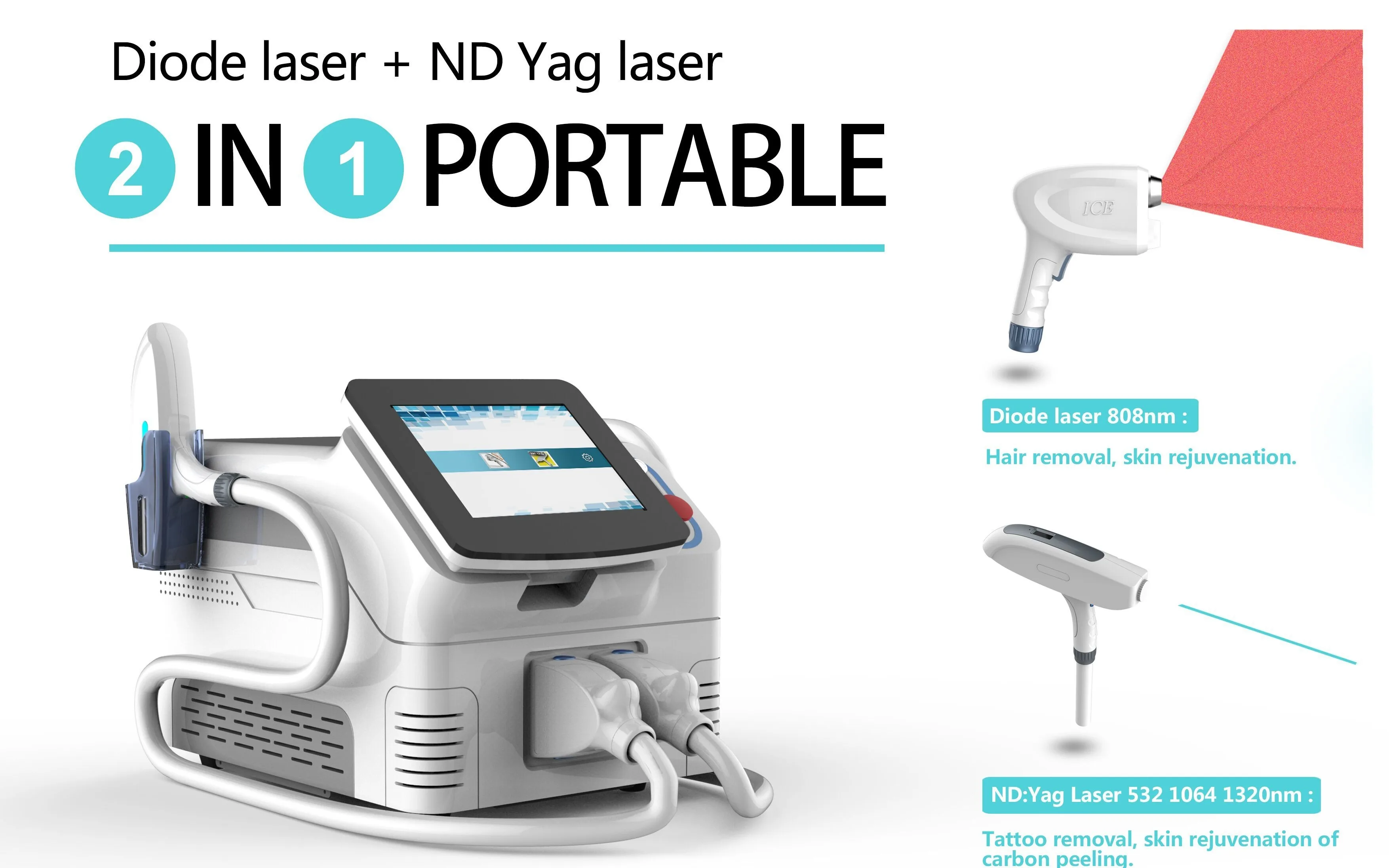
Only these three wavelengths are described here. Other laser technologies use different wavelengths and different principles, and they are not covered on this site.
The three wavelengths
The 532nm and 1064nm wavelengths appear in the portable diode laser combined with Nd:YAG, described in the shop timeline for tattoo removal and skin rejuvenation of carbon peeling. The manufacturer's DPL4-A2 product page lists Q-switch Nd:YAG applications including tattoo removal across colours, pigmentary lesions, dermal spots, freckles, moles, rosacea, birthmarks, and nevus of Ota.
The 1320nm wavelength appears on the manufacturer's page for the black facedoll treatment, which uses a 1320nm laser with carbon powder. That treatment is listed for the DPL4-A2 platform. Buyers of other Nd:YAG machines should confirm with the supplier whether the 1320nm function applies to their machine, rather than assuming it carries over from the platform page.
What buyers should confirm
Before payment, confirm which wavelengths a machine actually delivers, since a machine described as Nd:YAG may deliver one, two, or all three wavelengths. Confirm the spot sizes and handpieces for each wavelength, and the specification from the current product page in writing.
Ask about operator guidance for each wavelength, including any safety documentation. Different wavelengths involve different considerations, and guidance should cover each wavelength the machine delivers.